What Are the Different Types of Welded Wire Mesh?
Welded wire mesh is widely used due to its durability, strength, and versatility, maintaining its shape and form across various applications. Common uses include fencing, cages, shelving, and grates. Each application requires a specific type of welded wire mesh designed to meet the particular conditions.
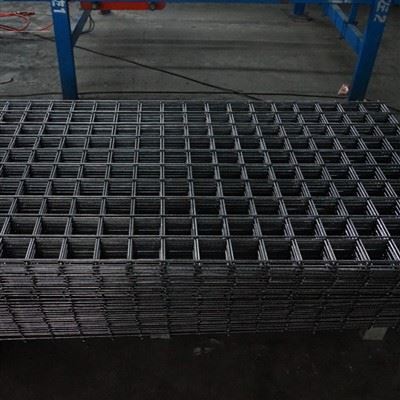
Welded wire mesh is also known as welded wire fabric. It is constructed and configured similarly, consisting of a prefabricated grid where longitudinal wires are precisely spaced and welded to cross wires. The intersections of these wires are automatically welded using electric resistance welding.
Square Welded Wire Mesh
Square welded wire mesh features intersecting wires that meet at right angles and are evenly spaced. This type of mesh is highly versatile and is commonly made from carbon steel or stainless steel.
Rectangular Welded Wire Mesh
Rectangular welded wire mesh is similar to square welded wire mesh, but with wires that intersect at right angles and are spaced further apart in one
direction. This rectangular design enhances the mesh's strength.
PVC Welded Wire Mesh
PVC welded wire mesh is coated with a thin layer of PVC powder to provide corrosion resistance, adding color and protecting the underlying metal. In addition to its resistance to corrosion, PVC welded wire mesh is also resistant to aging, sunlight, and weather. It is used across various industries, including farming, construction, transportation, and mining, to protect structures and workers, house livestock and poultry, and serve as a decorative element.
Galvanized Welded Wire Mesh
Galvanized welded wire mesh is coated with a protective layer of zinc to prevent rust and corrosion. This coating can be applied using either an electro-galvanizing process or hot dipping. Hot dipping involves immersing the welded wire mesh in molten zinc, which adheres to the wire's surface and provides a robust shield against rust. Electro-galvanizing, on the other hand, uses electricity to bond zinc to the metal wires. Galvanizing can be done either before or after the wire mesh is welded.
Galvanized wire mesh has different aperture sizes and wire diameters, which is one of its advantages. It is applied to welded wire mesh for a range of applications.
Welded Stainless Steel Wire Mesh
Welded stainless steel wire mesh is created by joining stainless steel wires at their intersections, forming a strong and uniform barrier. Known for its durability and strength, this type of wire mesh offers a consistent appearance and is one of the most popular choices available. The resistance welding process, which fuses the wires without the use of filler metal, results in a robust and reliable product. Welded stainless steel wire mesh can be cut into smaller shapes such as disks, squares, or rectangles. Due to its resistance to reacting with fluids, it is often used in filters and is extensively applied across various industries, including transportation, agriculture, mining, horticulture, and leisure.
To install welded wire fencing, you'll need posts, rings, pliers, and other essential tools. The panels are pre-fabricated in specific shapes and sizes, which allows for easy disassembly and reuse.
Heavy Welded Wire Mesh
Heavy welded wire mesh is distinguished by its significantly larger wire diameter compared to other types of welded wire mesh. Made from the same materials as traditional welded wire mesh but with thicker, more robust wires, it offers enhanced strength and durability. This makes heavy welded wire mesh suitable for use in floor reinforcement, wall structures, and various construction applications.
The properties and characteristics of heavy welded wire mesh depend on the materials used in its production. Stainless steel and galvanized heavy wire mesh, for instance, are both resistant to corrosion and capable of withstanding extreme conditions.