


The Shift to Non-Metallic Support: Why FRP Bolts Are Replacing Steel in Tough Mine Environments
For decades, if you walked into an underground mine and asked what held the roof up, the answer was always the same: steel. Steel rebar, steel split sets, steel cable strands. And for the most part, it works.
But if you've ever managed a wet, corrosive coal seam or watched a multi-million-dollar coal shearer grind to a halt because it clipped a stray steel bolt, you know steel has blind spots.
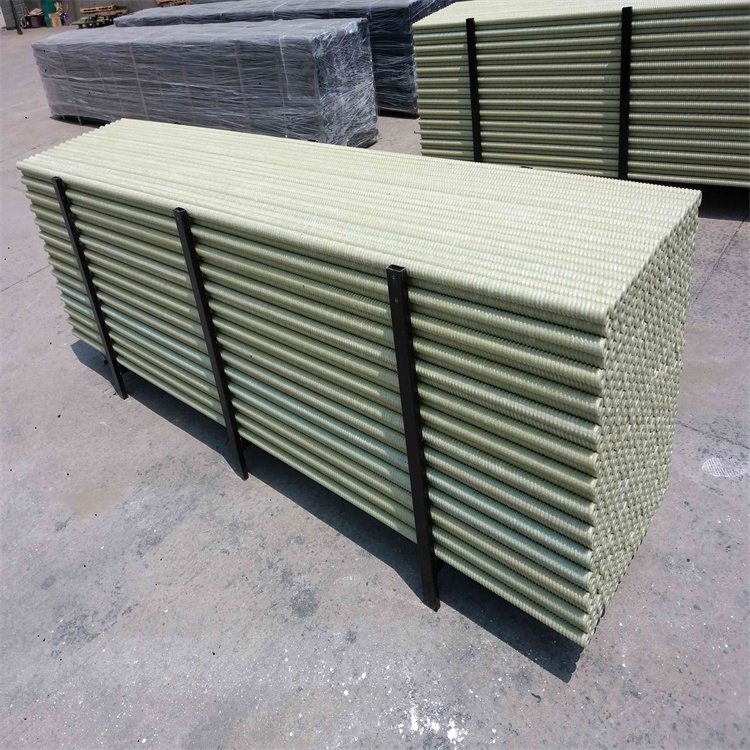
That's why, over the last few years, I've seen more and more project managers quietly making the shift toward FRP (Fiberglass Reinforced Polymer) Bolts. They aren't just a "modern trend"-they are a pragmatic fix for very specific, expensive site headaches. Let's talk about why.
Let's be honest about water underground. It's rarely just clean water; it's usually acidic, full of sulphates, and brutal on metals.
I've walked through haulage ways where standard steel bolts installed barely three years prior were scaled down to half their thickness by corrosion. When that happens, your safety factor drops off a cliff, and suddenly you're budgeting for expensive re-bolting projects.
FRP simply doesn't care about acid. Because it's a composite of high-strength glass fibers locked inside a tough resin matrix, it won't rust. Period. If your mine's Opex budget is constantly bleeding money because groundwater is chewing through your steel support, switching to FRP isn't a radical idea-it's just basic math.

2. The "Cutability" Factor (Saving Your Machines)

Here is the second massive problem FRP solves, especially in longwall or retreat mining: the coal shearer.
When a continuous miner or a shearer has to cut right through the coal ribs during extraction, encountering steel is a nightmare. The tungsten carbide cutting picks hit the steel, sparks fly, teeth shatter, and the drum gets wrecked.
I've seen single incidents where a stray steel bolt halted production for an entire shift, costing thousands in parts and hours of lost output.
FRP changes the game completely. When the shearer hits an FRP bolt, the machine just grinds it into harmless fibers. No broken teeth, no sparks, no unplanned downtime. It's a machine-friendly material designed for modern mechanized mining.
It sounds minor when you're looking at a spreadsheet in an air-conditioned office, but talk to the bolting crew underground.
Steel is heavy. Haunting heavy bundles of steel rebar deep underground, lifting them overhead in a cramped 2.5-meter high entry, takes a serious physical toll. FRP bolts are roughly one-quarter the weight of steel.
Lighter materials mean less operator fatigue, faster cycle times during installation, and fewer shoulder and back injuries. Your underground crew will notice the difference on day one.

4. The Honest Truth: Where Steel Still Wins
Now, let's not pretend FRP is a silver bullet that cures all mining challenges. A real engineer doesn't sell a product that way.
Steel still holds unmatched initial shear strength and is generally cheaper for standard, dry civil tunnels where corrosion and machine "cutability" aren't the main drivers. If you're in dry, hard-rock tunneling with massive static loads, high-grade steel is still your go-to.
The trick is knowing your geology. Don't use FRP everywhere just because it's modern; use it where steel fails.


FAQ
Q: What international standards do your self-drilling anchor bolts comply with?
A: Our SDA systems (including R-thread and T-thread) are manufactured in strict accordance with ISO 10208 and ASTM standards. We use high-strength seamless steel tubing to ensure superior tensile and yield strength for demanding mining and tunneling projects.
Q: Why are SDA bolts more efficient than traditional rock bolts in fractured ground?
A: Traditional bolts require a pre-drilled hole which often collapses in loose ground. The SDA system combines drilling, grouting, and anchoring into a single operation. This eliminates the need for casing pipes and prevents borehole collapse, saving up to 50% of installation time.
Q: How do your spherical nuts handle uneven rock surfaces?
A: Our precision-engineered spherical nuts (dome nuts), when paired with domed plates, allow for 7 to 10 degrees of angular compensation. This ensures that the bolt maintains a secure, perpendicular load distribution even when the tunnel face is irregular or uneven.
If your site is fighting aggressive groundwater, or if you're running a mechanized coal face where machine damage is eating your profits, it's time to look past traditional steel.
At Zhongfu Mining, we've spent a lot of time refining our pultrusion lines to make sure our FRP bolts have consistent tensile strength and precise, reliable threading. We don't want to just sell you a bolt-we want to make sure it's the right material for your specific ground conditions.
Want to figure out if FRP fits your mine specs?
Drop [our technical team] a line. Let's look at your water chemistry and mining layout together, no sales fluff, just engineering solutions.
Our address
West Side Of Jianshe Street, Southwest Industrial Zone, Linmingguan Town, Handan, Hebei, China
Phone Number
easonoflangben@langben.net

Get a Free Project Material Cost Calculation