


In high-strength ground support, bridge construction, and prestressed anchoring systems, specifying a high-grade bar like PSB830 is only half the engineering equation. A prestressed threaded bar system operates as a continuous load-transfer chain, where every component-from the anchor nut to the bearing plate-must withstand and distribute immense tension without localized failure.
Field experience shows that structural issues or jobsite delays rarely stem from the steel bar alone. More often, they trace back to mismatched hardware, thread damage during transport, or misaligned installation. To ensure long-term structural integrity and smooth site execution, engineers and site supervisors must manage four critical system points.
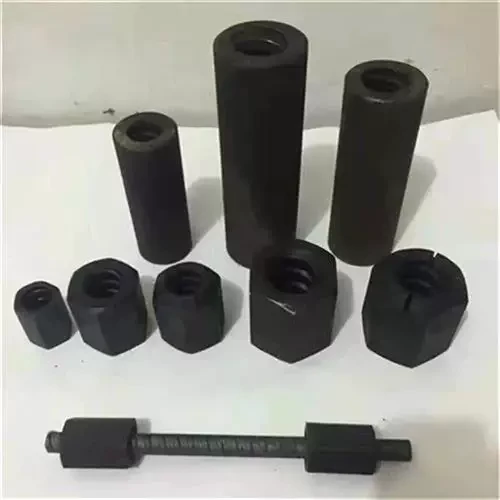
A threaded bar assembly is only as strong as its weakest link. Pairing a PSB830 bar with under-rated, off-spec, or generic anchor nuts and couplers creates immediate safety risks.
Mechanical Compatibility: High-strength nuts, hex nuts, spherical nuts, and couplers must be precision-machined to match the specific thread pitch and yield/ultimate tensile requirements of the bar.
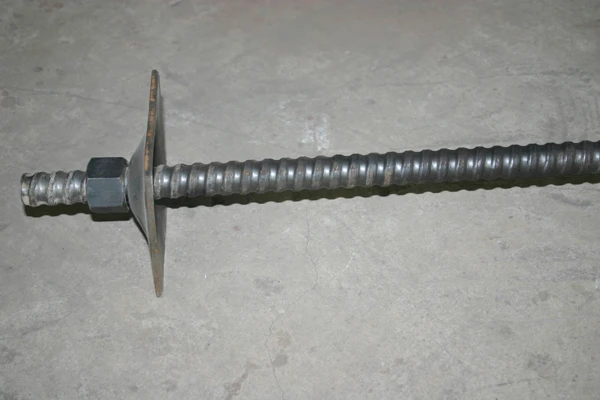
Load Transfer Area: Bearing plates must be sized and proportioned to handle the full design load, distributing tension evenly into the concrete structure or rock face without exceeding concrete bearing capacity or causing localized crushing.
Sourcing Integrated Systems: Sourcing bars and structural accessories from a single supplier ensures seamless thread engagement, verified tolerance fits, and fully matched tensile test reports before delivery.
2. Protecting Thread Integrity: Transport, Storage, and Handling
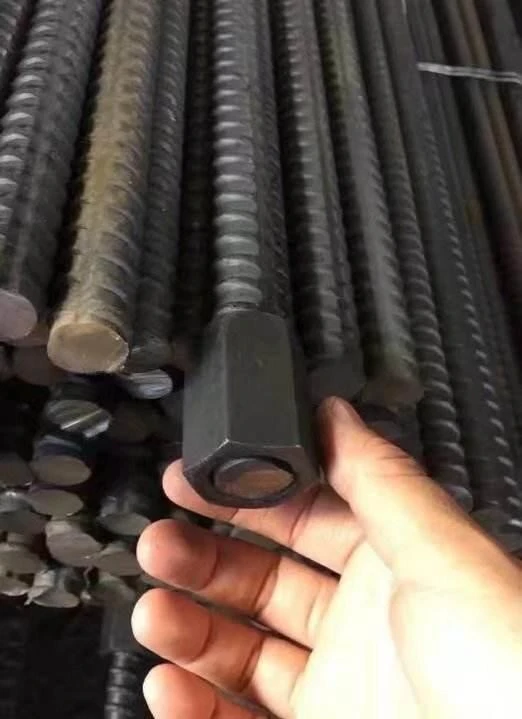
Unlike standard deformed rebar, which relies solely on concrete bond strength, a prestressed threaded bar relies on crisp, continuous threading along its entire length for mechanical anchoring and splicing. Thread damage directly impacts installation speed and load capacity.
Transit and Jobsite Protection: Thread ends should be fitted with heavy-duty protective plastic caps during loading, maritime transport, and site movement to prevent thread deformation or impact damage.
Corrosion Control in Storage: Bare steel bars stored in humid, coastal, or high-rainfall environments quickly develop heavy surface oxidation. Rain and ground moisture can pitting-corrode the thread roots, altering thread tolerances and leading to cross-threading during assembly. Elevating bars off the ground on dunnage and covering them with breathable tarps prevents early degradation.
Proper site installation directly governs how tension forces transfer through the anchoring system. Poor field practices can introduce bending moments or compromise long-term durability.
Concentricity and Alignment: During tensioning or mechanical locking, the bearing plate, anchor nut, and bar must remain strictly perpendicular to the loading face. Angular misalignment induces eccentric loads, introducing severe bending stress on the bar threads near the anchor head.
Proper Torque and Engagement: Couplers must achieve full thread engagement on both bar ends to ensure equal load distribution. Partial engagement risks thread stripping under peak tensile loads.
Grouting Integrity: For permanent rock anchors or post-tensioned systems, complete grout encapsulation eliminates voids, protecting the high-strength steel from moisture ingress and hydrogen embrittlement risks over time.
4. Quality Control and Receipt Verification at the Jobsite
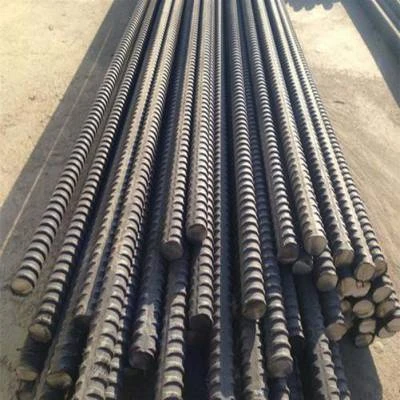
Before placing high-strength threaded bars into service, strict quality control procedures must be completed at the site gate to avoid costly rework or structural sub-standard installation.
Mill Test Certificates (MTC): Every shipment should be accompanied by heat-traceable MTCs confirming chemical composition, yield strength, tensile strength, and elongation compliance under applicable standards (e.g., GB/T 20065 or project equivalents).
Dimensional and Thread Tolerance Checks: Perform random fit-up tests using standard couplers and nuts from the same batch to confirm thread smooth-running and tolerance consistency across different bar bundles.
Visual Surface Inspection: Check bars and accessories for severe mechanical gouges, excessive rust pitting, or manufacturing defects that could act as stress concentrators during tensioning.


FAQ
Q: What international standards do your self-drilling anchor bolts comply with?
A: Our SDA systems (including R-thread and T-thread) are manufactured in strict accordance with ISO 10208 and ASTM standards. We use high-strength seamless steel tubing to ensure superior tensile and yield strength for demanding mining and tunneling projects.
Q: Why are SDA bolts more efficient than traditional rock bolts in fractured ground?
A: Traditional bolts require a pre-drilled hole which often collapses in loose ground. The SDA system combines drilling, grouting, and anchoring into a single operation. This eliminates the need for casing pipes and prevents borehole collapse, saving up to 50% of installation time.
Q: How do your spherical nuts handle uneven rock surfaces?
A: Our precision-engineered spherical nuts (dome nuts), when paired with domed plates, allow for 7 to 10 degrees of angular compensation. This ensures that the bolt maintains a secure, perpendicular load distribution even when the tunnel face is irregular or uneven.
Conclusion: Securing Your Project with Fully Matched Systems
High-strength prestressed bar applications require an end-to-end focus on component matching, thread protection, and rigorous site handling. By treating the PSB bar, nut, coupler, and bearing plate as a unified structural system, engineering teams can ensure predictable performance and prevent site downtime.
We supply fully integrated PSB830, PSB785, and PSB930 threaded bar systems, complete with certified matching anchor nuts, couplers, and bearing plates. Reach out to our technical team today to request component load charts, project submittals, or custom package quotes.
Our address
West Side Of Jianshe Street, Southwest Industrial Zone, Linmingguan Town, Handan, Hebei, China
Phone Number
easonoflangben@langben.net

Get a Free Project Material Cost Calculation